Architecture diagrams
Generated from JSON committed in the repo, not drawn by hand, and rebuilt before submission. The first one is the architecture being proposed. The other three describe this demo as it actually is, and a node in them is never marked Real unless it really runs.
These are desktop canvases. On a phone you get the still image below, which is the whole diagram. Open this page on a larger screen for the interactive version, with zoom, search and the source links.
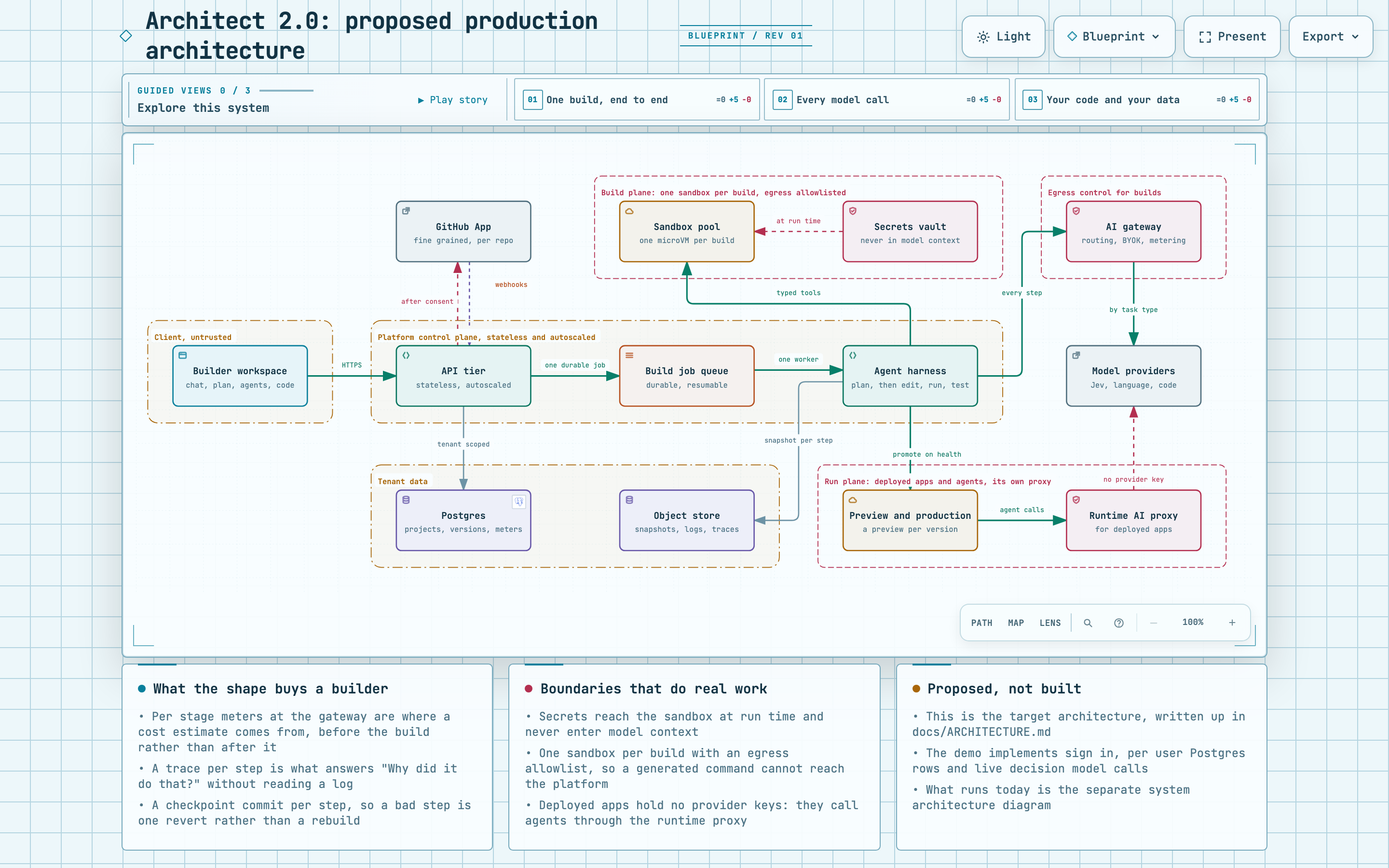
Proposed production architecture
The target architecture for Architect 2.0, and the only diagram here that describes something not built: sandboxing, the agent harness, the two proxies, model routing, GitHub, deploy and scaling, with the trust boundaries drawn. The decisions behind it are in docs/ARCHITECTURE.md.
 Tap the image to open it full size and zoom
Open the diagramOpen anyway, needs a wide screenSource: docs/architecture/proposed-architecture.json
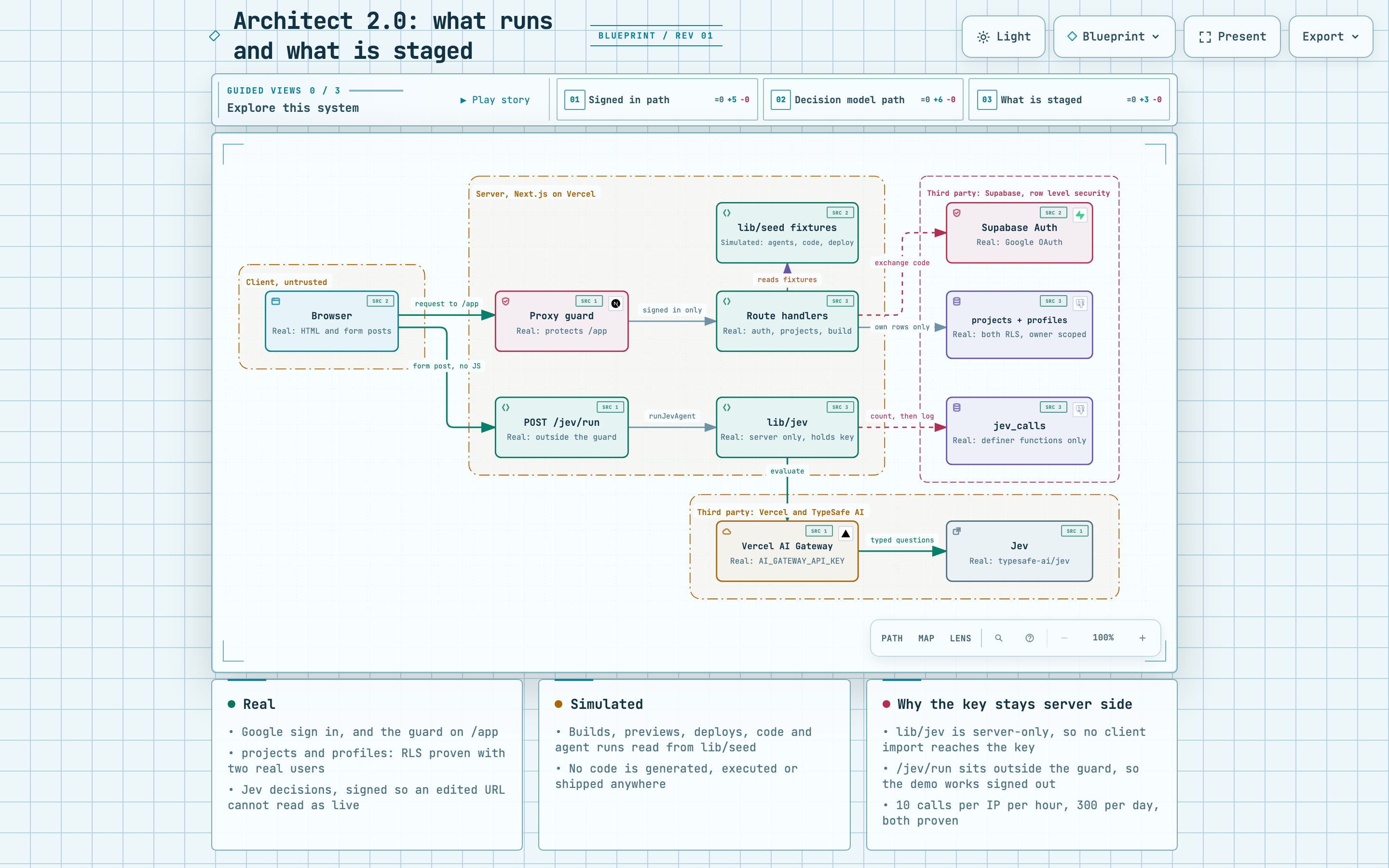
System architecture, as built
What runs and what is staged in this demo, with the trust boundaries drawn. Every node says Real or Simulated, and 22 of them link to the exact file and lines at the commit the diagram was built from.
 Tap the image to open it full size and zoom
Open the diagramOpen anyway, needs a wide screenSource: docs/architecture/architecture.json
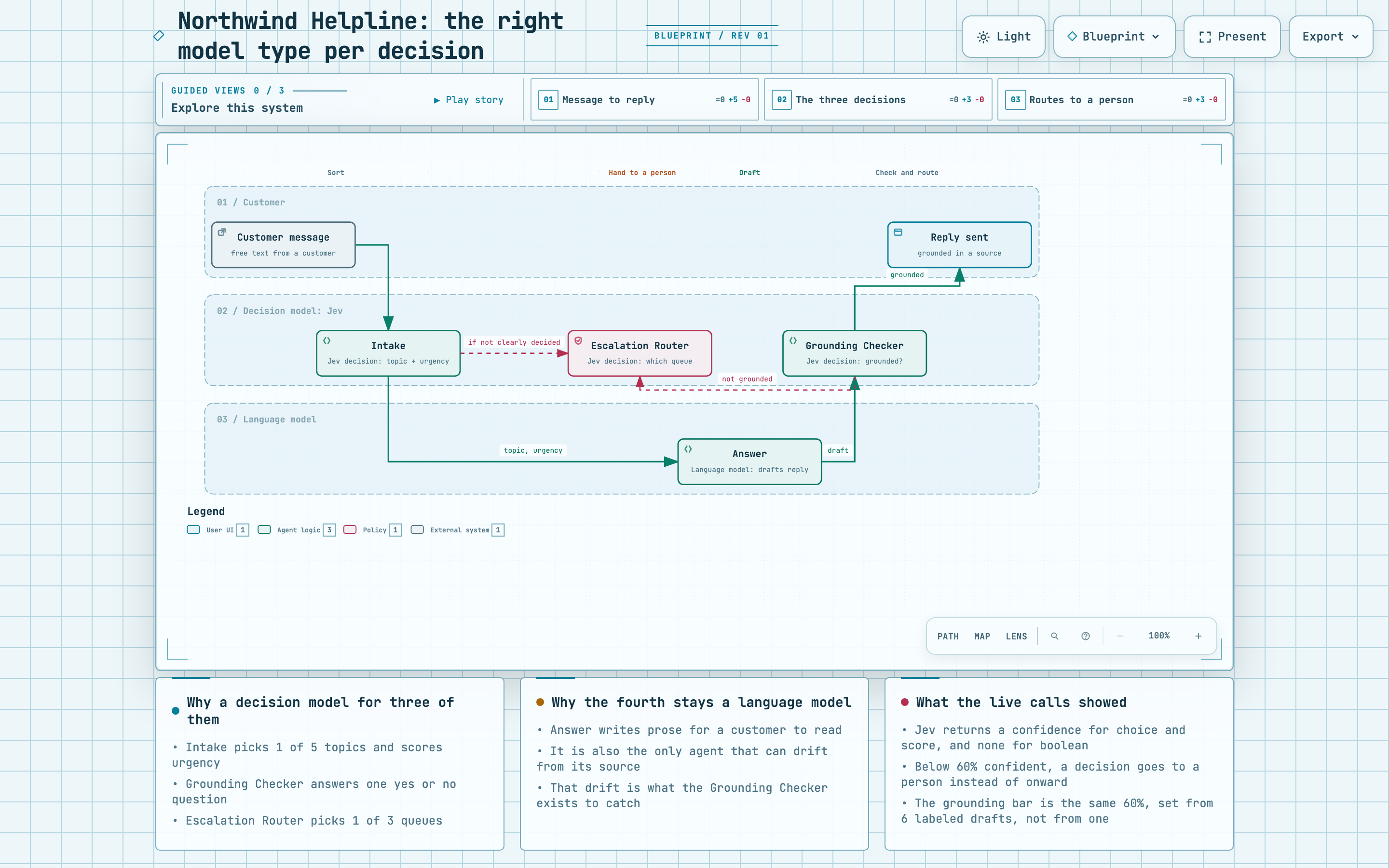
Agent workflow
The four Northwind agents in the order they run, each naming the kind of model it uses and why that is the right kind for its job.
 Tap the image to open it full size and zoom
Open the diagramOpen anyway, needs a wide screenSource: docs/architecture/agent-workflow.json
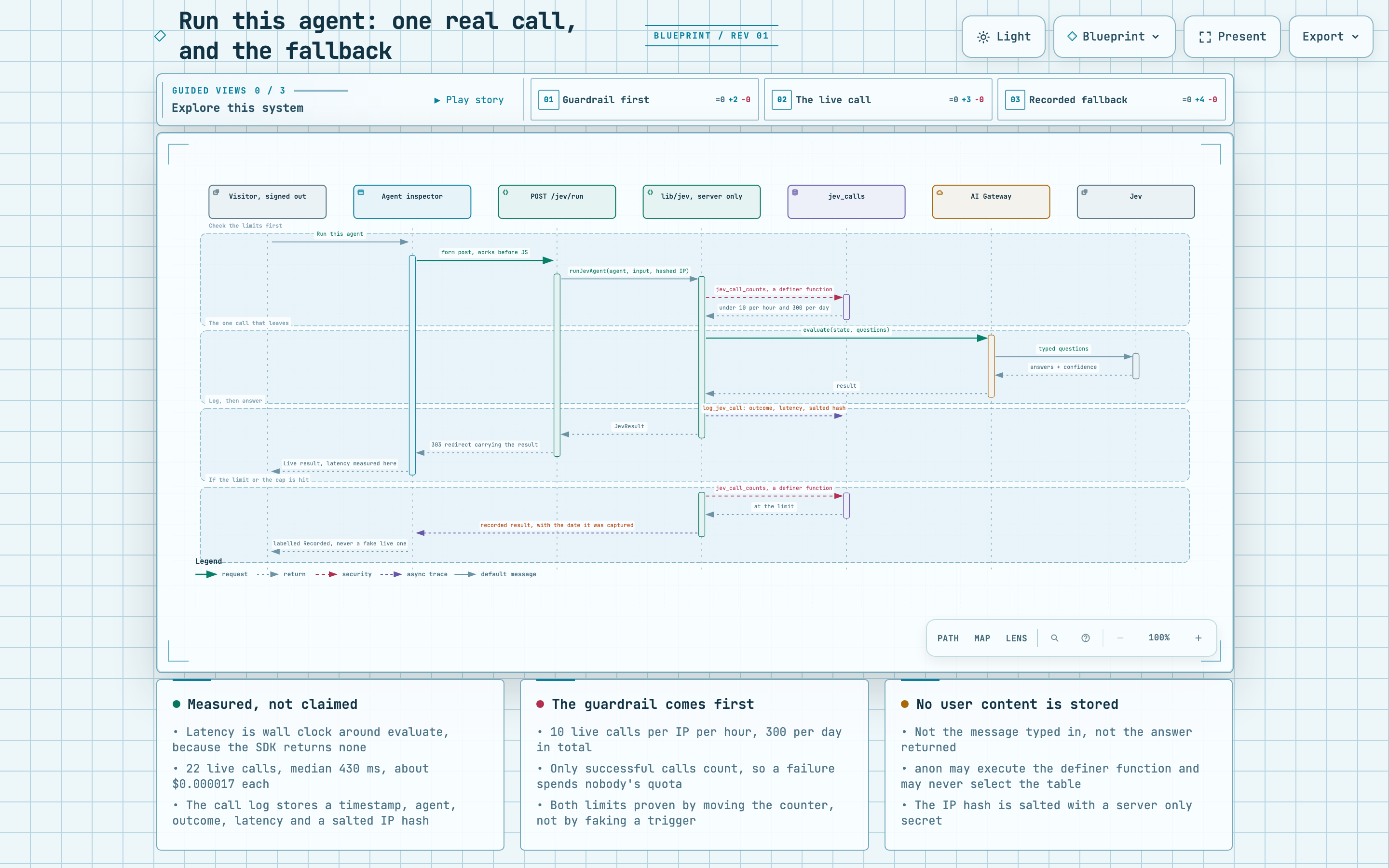
Jev call sequence
One press of Run this agent, end to end: the rate limit checked before the Gateway is touched, the call, the log write, and the recorded fallback.
 Tap the image to open it full size and zoom
Open the diagramOpen anyway, needs a wide screenSource: docs/architecture/jev-call-sequence.json
One known limitation: below about 900px of viewport height the diagram page scrolls, and the viewer's floating toolbar then sits over the rightmost guided-view chip. Scrolling back up clears it. Fixing it properly would mean widening the canvas, which shrinks the node labels the same review asked to make bigger, so it is recorded rather than traded away. See D45 in the decision log.